
String Wound Filter Cartridges
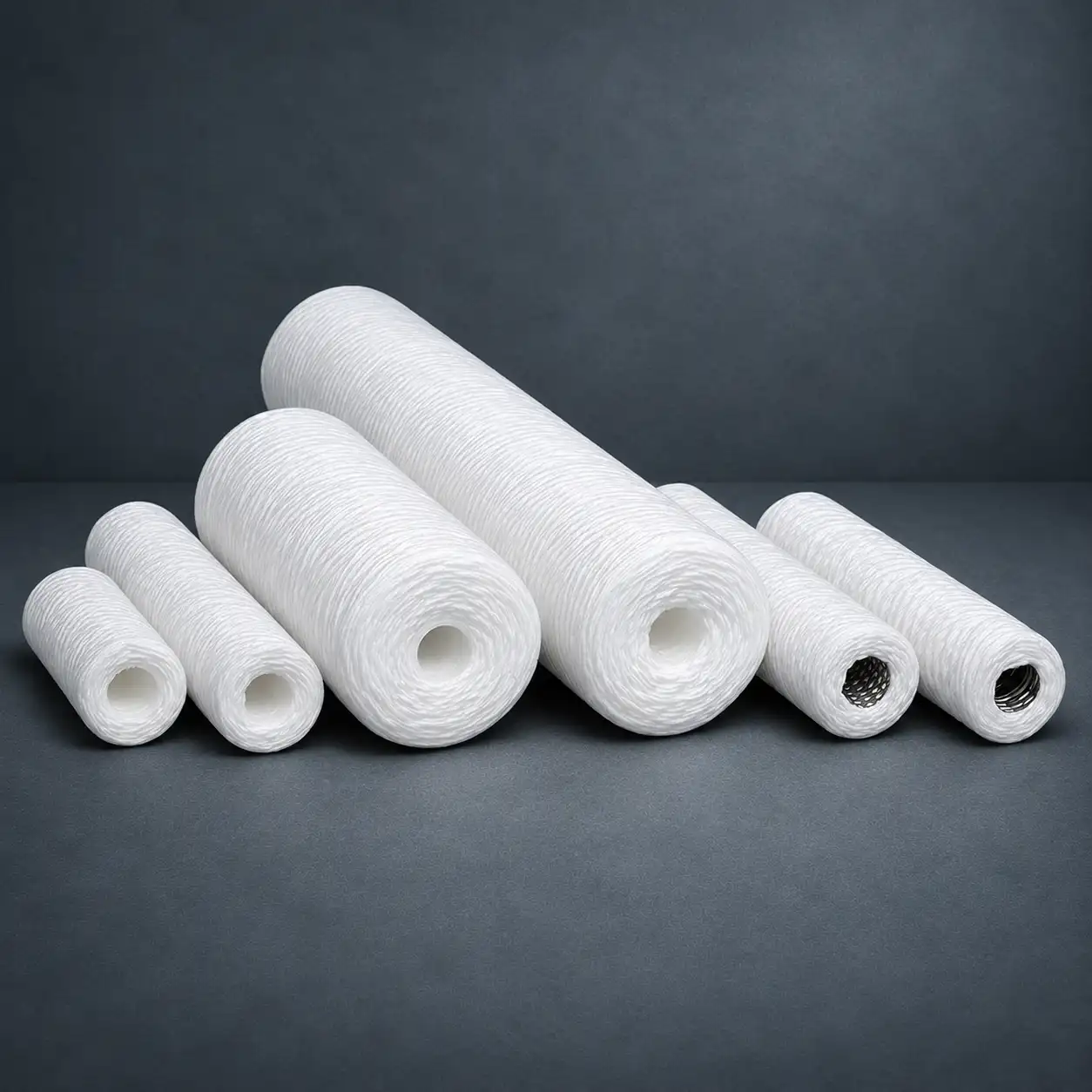
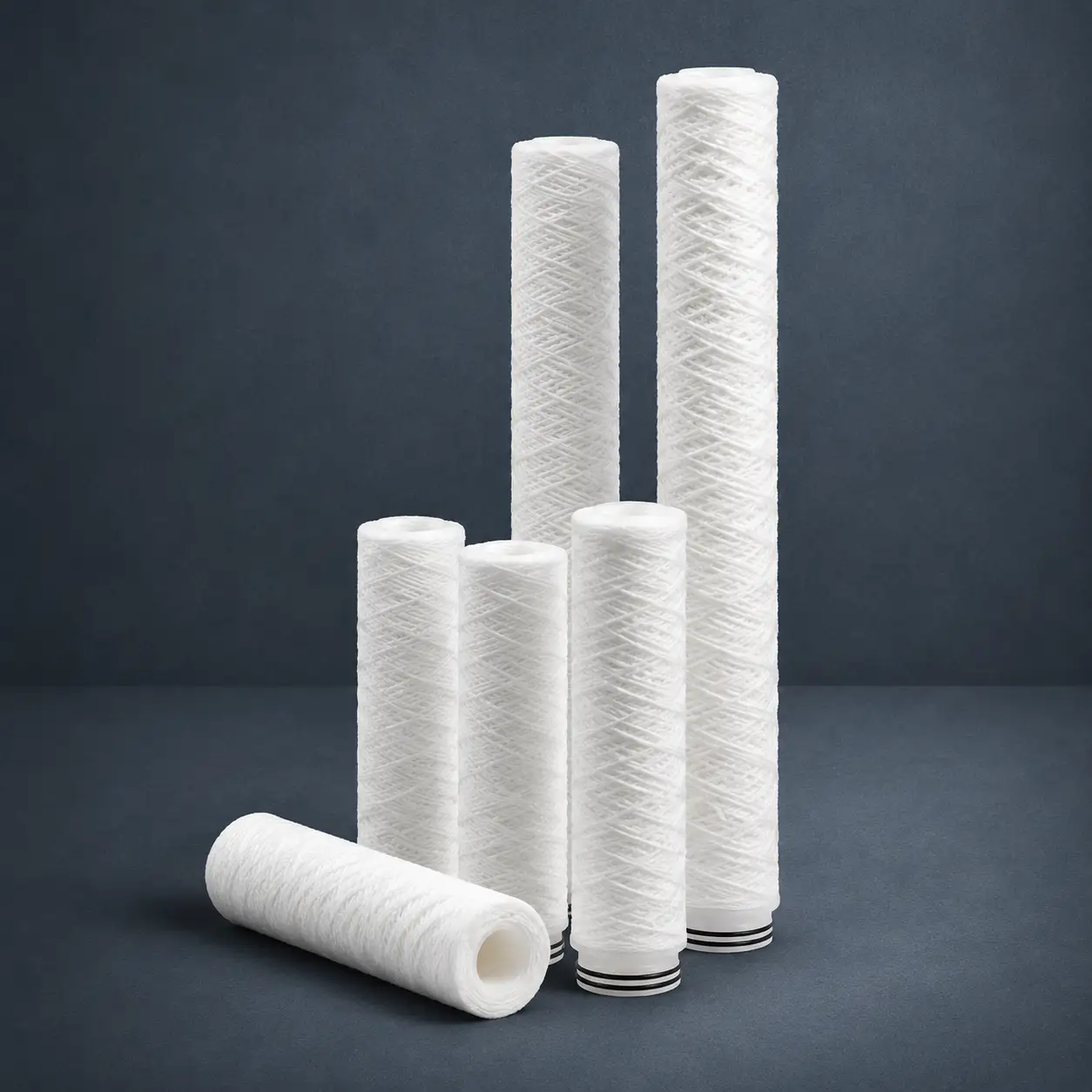
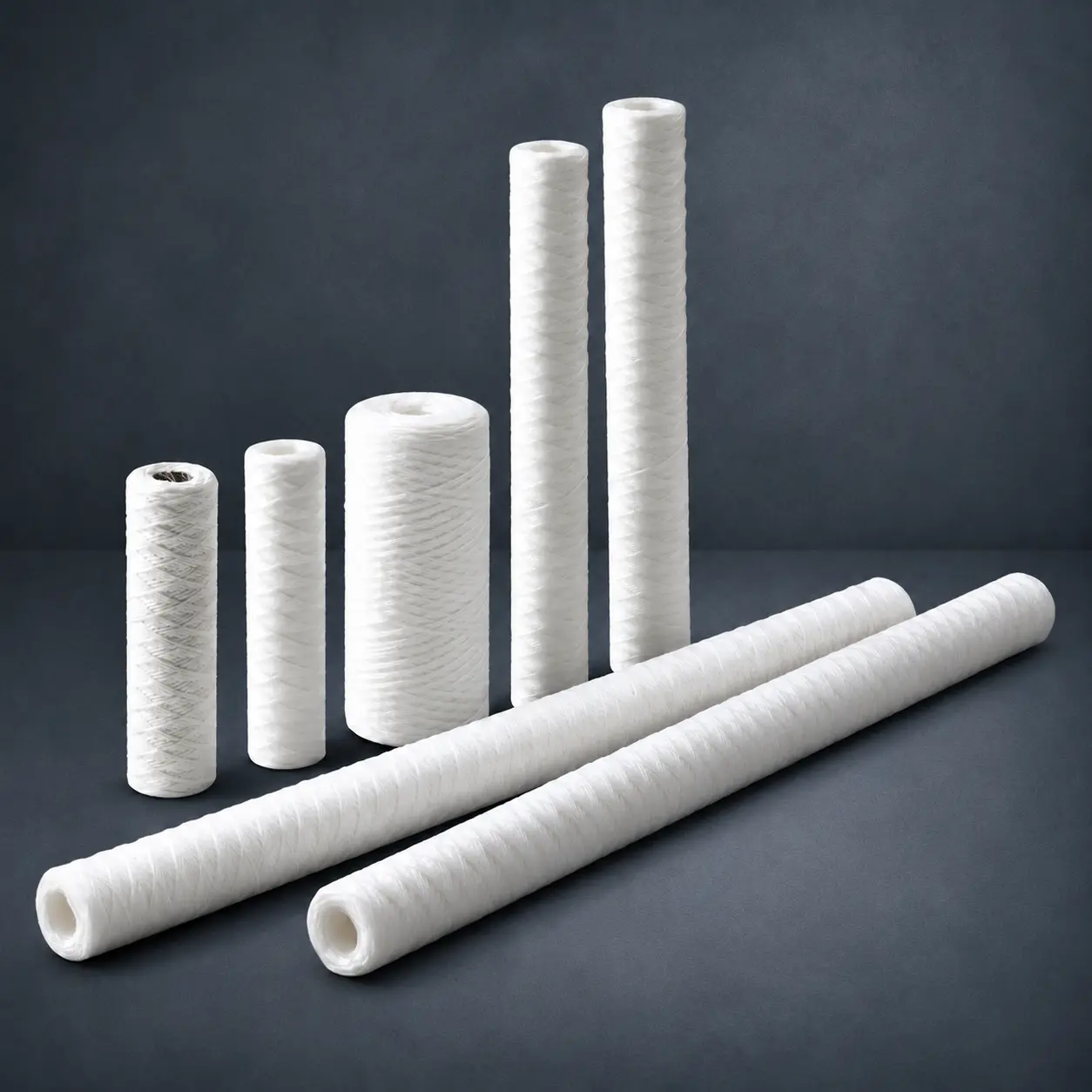
Depth-type filtration element made by tightly winding yarn or string around a perforated polypropylene or 304/316 stainless steel core. The winding pattern creates progressively smaller filtration passages, allowing the cartridge to capture suspended solids, dirt, rust, sand, and other particulate contaminants throughout its depth.
- High Dirt-Holding Capacity — Efficient particle retention extends filter service life, reduces cartridge replacement frequency, and lowers operating costs.
- Low Initial Pressure Drop — Optimized winding structure supports high flow rates with minimal initial pressure drop (ΔP), helping improve filtration system efficiency.
- Consistent Manufacturing Quality — Precision winding ensures uniform yarn tension and density, delivering reliable and repeatable filtration performance.
- Wide Chemical Compatibility — Available in various fiber materials, including polypropylene (PP), cotton, and glass fiber, to accommodate different liquid properties and chemical compatibility requirements.
APPLICATIONS
String-Wound Filters
- Water Treatment: Removal of sediment, sand and rust.
- Chemical Processing: Pre-filtration of compatible chemical liquids.
- Food & Beverage: Removal of suspended particles.
- RO Pretreatment: Protecting downstream membranes from sediment.
FEATURES
PP string wound filter cartridge
- High Flow Capacity
- Scalable Capacity
- Quick Changeouts and Easier Maintenance
- Compact Footprint
- Enclosed Processing
- Lower Initial Equipment Cost
How Does a String Wound Filter Cartridge Work?
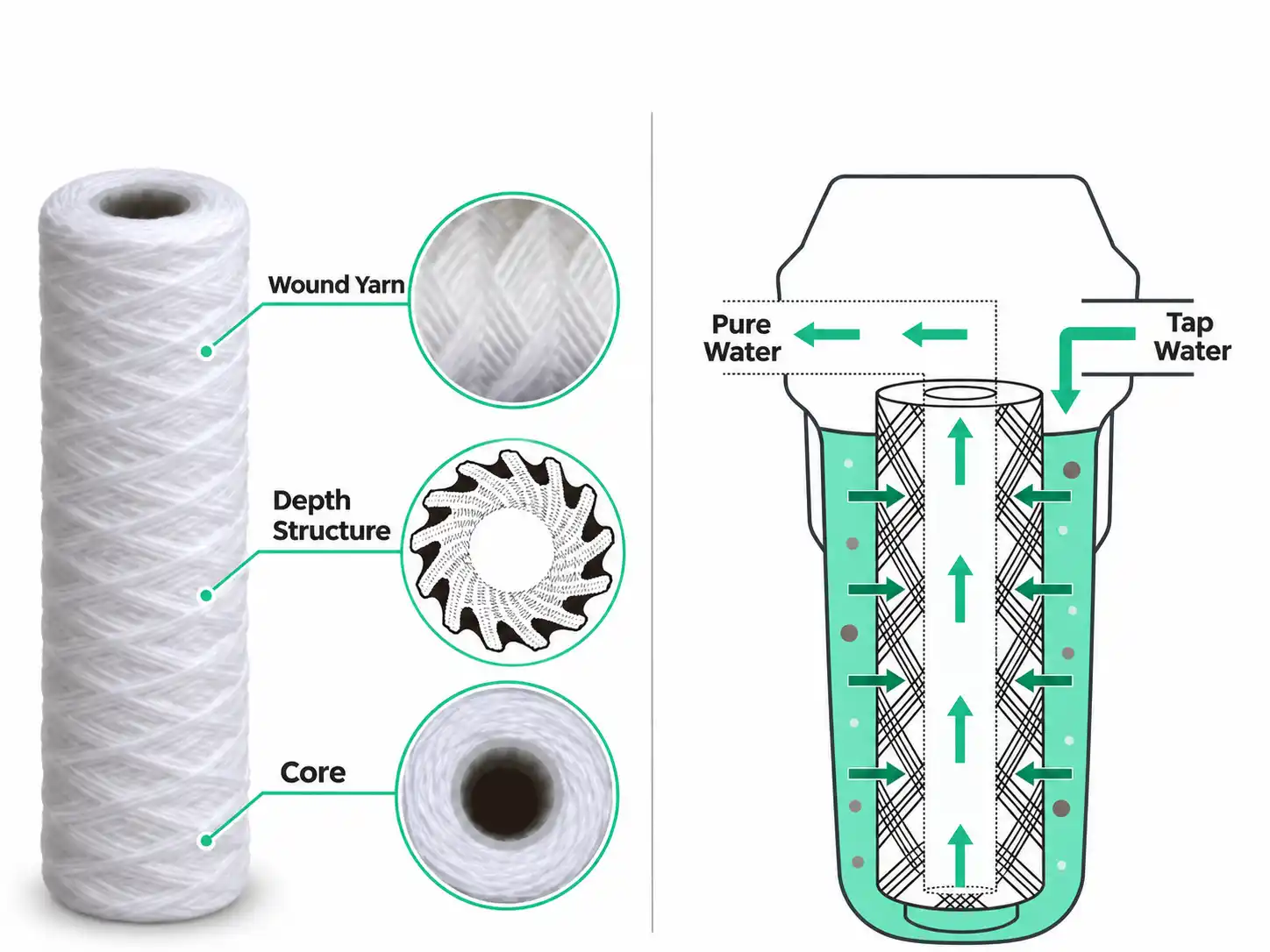
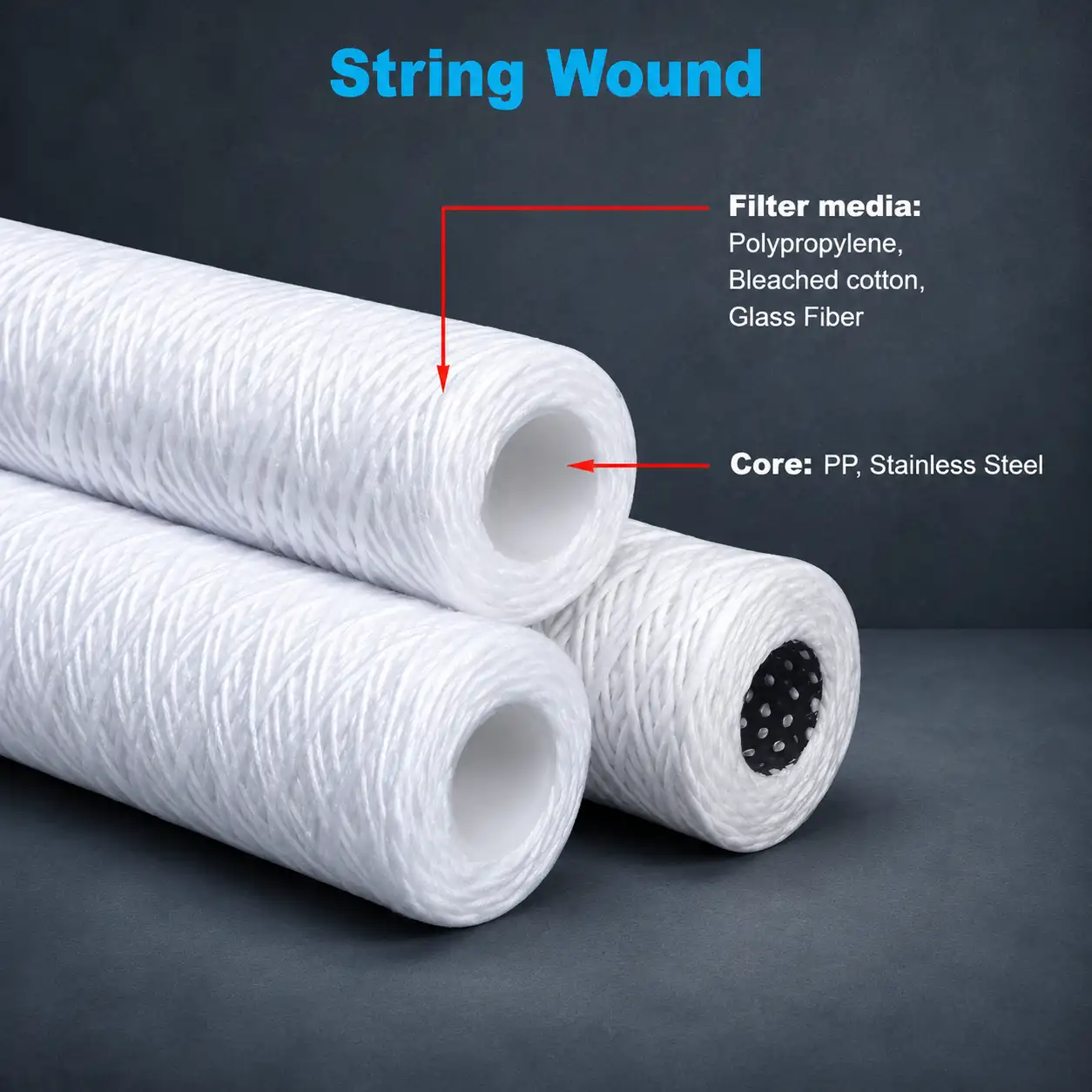
A string wound filter cartridge works through depth filtration, capturing suspended particles as liquid passes through its tightly wound yarn layers.
The filtration process typically follows three steps:
1. Liquid Inlet: Unfiltered liquid enters the filter housing and flows from the outside of the cartridge toward the central core.
2. Particle Retention: As liquid passes through the progressively layered yarn structure, suspended solids such as sand, rust, dirt, and other particles are trapped within the winding layers. Larger particles are generally retained in the outer layers, while smaller particles can penetrate deeper into the filter media.
3. Filtered Liquid Outlet: The filtered liquid passes through the central core and exits the cartridge, leaving captured contaminants behind.
Specifications
PORE RATING
- 1, 5, 10, 20, 30, 50, 75, 100 µm
Materials
- Filter Media
- Support
- Diameter
- Double O-ring / Flat Gasket
- Length
- PP, Cotton
- Polypropylene/Stainless 304, 316
- 63 mm / 115 mm (OD), 28 mm/ 30 mm (ID)
- Silicone/EPDM/Viton
- 9.75" (248 mm) / 10" (254 mm) / 20" (508 mm) / 30" (762 mm) / 40" (1016 mm)
Maximum operating conditions
- Maximum forward differential pressure
- Maximum operating temperature
- 2.0 Bar, 25°C
- 80°C (176°F)
Indirect food additive
- Meets the FDA Indirect Food Additive requirements cited in 21 CFR 177-182
Food contact material
- (EU) No. 1935/2004, (EU) No. 10/2011
Quality
- Manufactured in accordance with ISO 9001 and ISO 13485 certified quality management system
Date Sheet
Product Documentation
Published JUNE 22, 2025
String Wound Filter Cartridge
Download PDF
Order Guide Information
| Please choose: | Diameter | Membrane Materials | Retention rating (µm) | End Cap | Length (inch) | O-Ring | |
|---|---|---|---|---|---|---|---|
| B = ∅115 / ∅30 | P=PP | 1 | Blank = DOE | 10 | Silicone | ||
| S = ∅ 63 / ∅28 | CT=Cotton | 3 | D=DOE with Gasket | 20 | EPDM | ||
| 5 | 222/Fin | 30 | Viton | ||||
| 10 | 222/Flat | 40 | |||||
| 20 | 226/Fin | ||||||
| 226/Flat | |||||||
Date Sheet
Product Documentation
Published APR 12, 2024
PP pleated filter cartridge
Download PDF
Frequently Asked Questions
What Is a String Wound Sediment Water Filter Used For?
A string wound sediment water filter is used to remove suspended solids such as sand, dirt, rust, silt, and other particulate contaminants from water. It is commonly installed in water treatment systems, well water filtration, reverse osmosis pretreatment, and industrial processes to protect downstream equipment.
String Wound Filter Cartridge vs. Melt Blown Filter: What Is the Difference?
String wound and melt blown filter cartridges both use depth filtration to remove suspended particles, but their manufacturing structures differ. String wound filters use tightly wound yarn around a central core, while melt blown filters are made from thermally bonded fibers. Their filtration efficiency, dirt-holding capacity, and pressure drop depend on product design.
How Often Should You Replace a String Wound Filter Cartridge?
The replacement frequency of a string wound filter cartridge depends on water quality, contaminant concentration, operating conditions, and filtration requirements. Monitor the differential pressure across the filter, flow rate, and filtered liquid quality. Replace the cartridge when pressure drop increases significantly or filtration performance declines.
Is a String Wound Filter Good for Well Water?
Yes, string wound filter cartridges are suitable for removing sediment from well water, including sand, silt, rust, and suspended particles. They are commonly used as prefilters to protect pumps, plumbing, and downstream filtration equipment. However, they cannot remove dissolved contaminants or reliably eliminate bacteria and viruses.
Pleated Filter Cartridges Compliance
- USP Class VI - Plastics
- ISO 9001 & ISO 13485
- Regulation (EC) 1935/2004
- FDA Compliant Materials