Membrane Filters Supplier
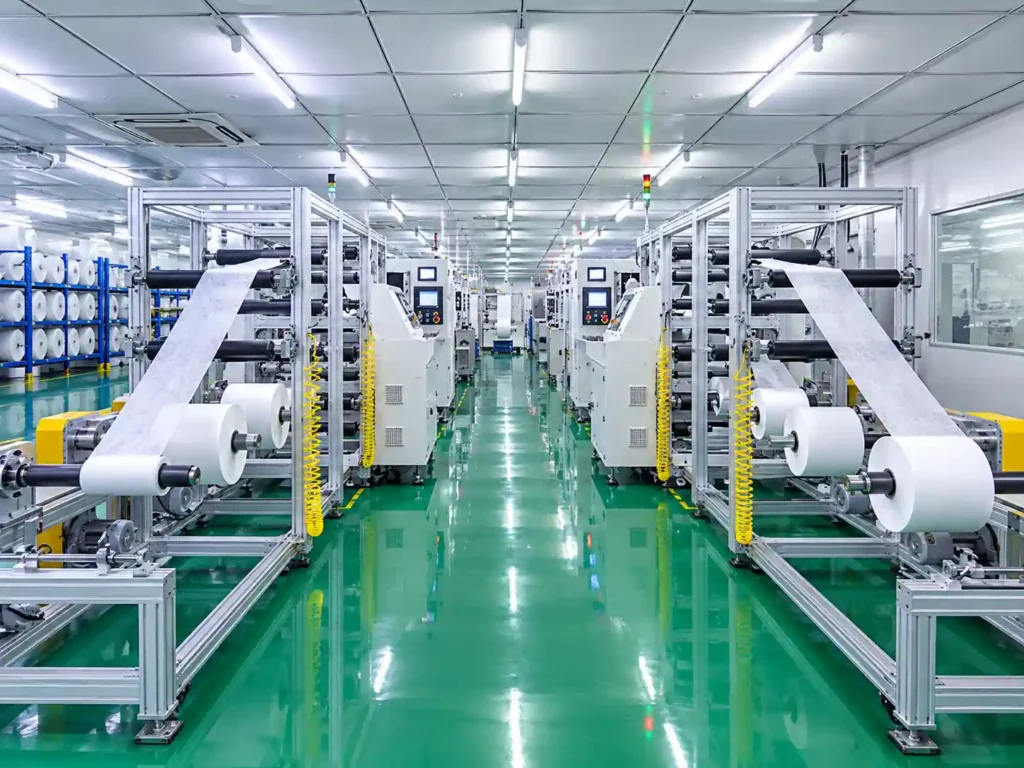
COFILERS provides reliable membrane filtration solutions supported by ISO 9001 quality management, controlled cleanroom production environments, and comprehensive testing capabilities, including Bubble Point, Diffusion and Pressure Hold tests. Bacterial retention validation and relevant FDA food-contact and USP Class VI compliance documentation are available for applicable products.
With stable raw material sourcing and efficient inventory management, COFILERS ensures dependable product supply. We offer flexible OEM/ODM services and customized manufacturing to meet diverse customer requirements across different industries.
Membrane Filters Collection
Microfiltration Membrane Filters
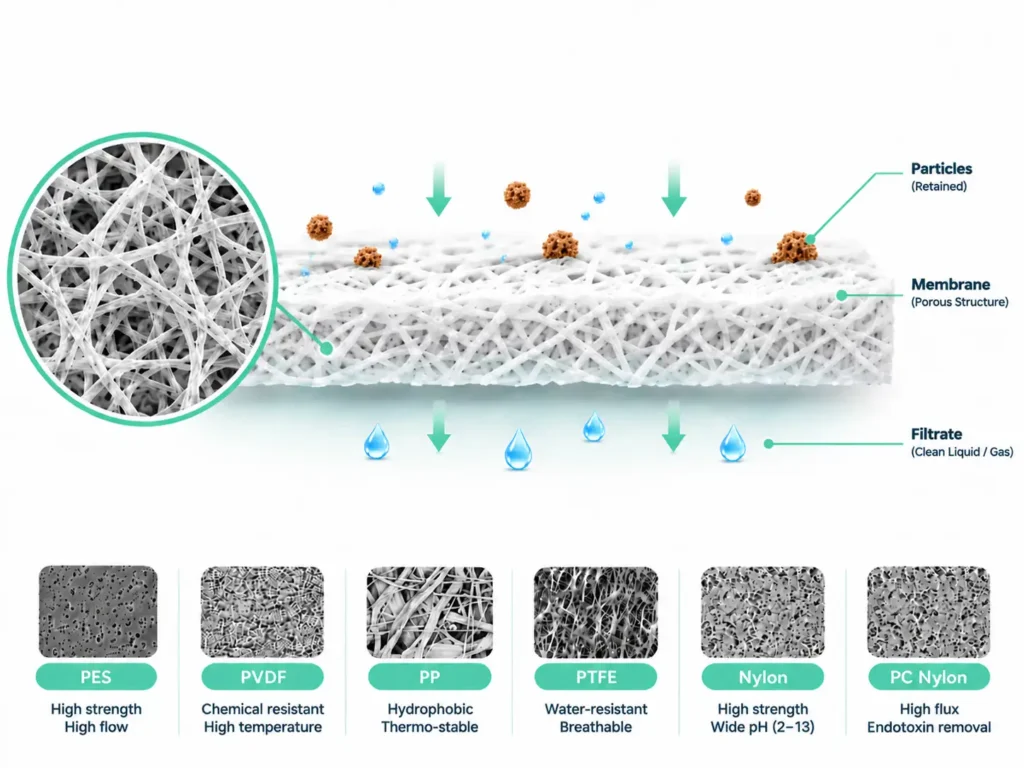
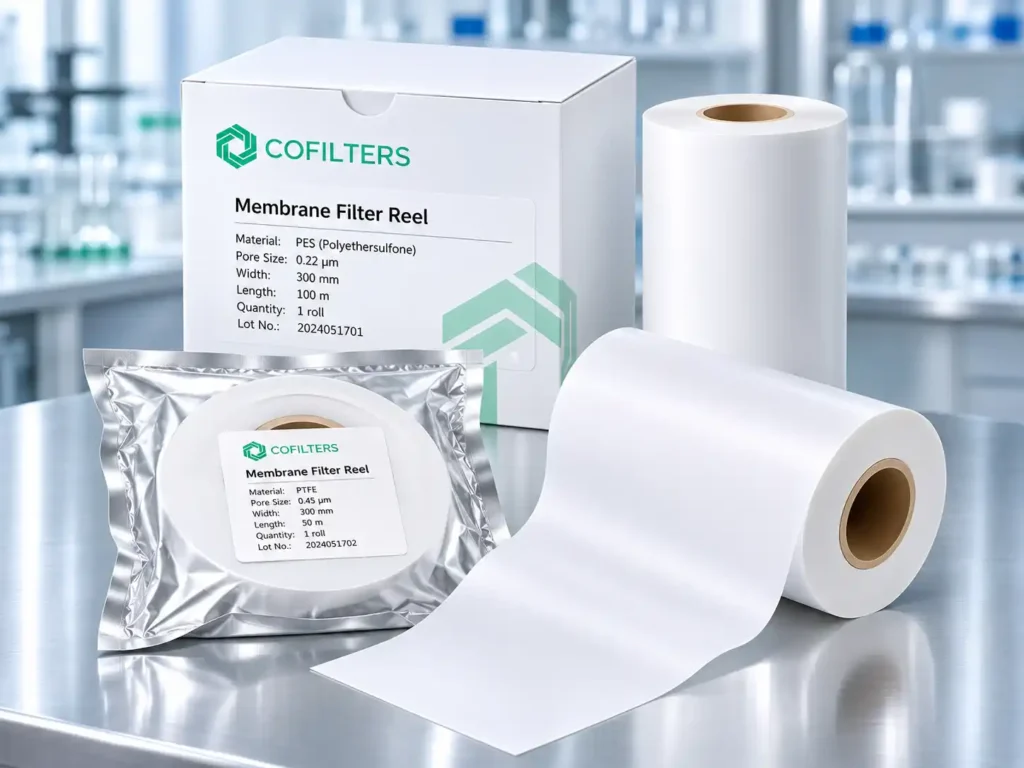
Membrane filters act as microporous physical barriers, separating particles from liquids or gases based on size and other physical properties. Through surface screening and interconnected pore structures, they retain unwanted contaminants while allowing the desired fluid to pass through, delivering reliable and consistent filtration performance.
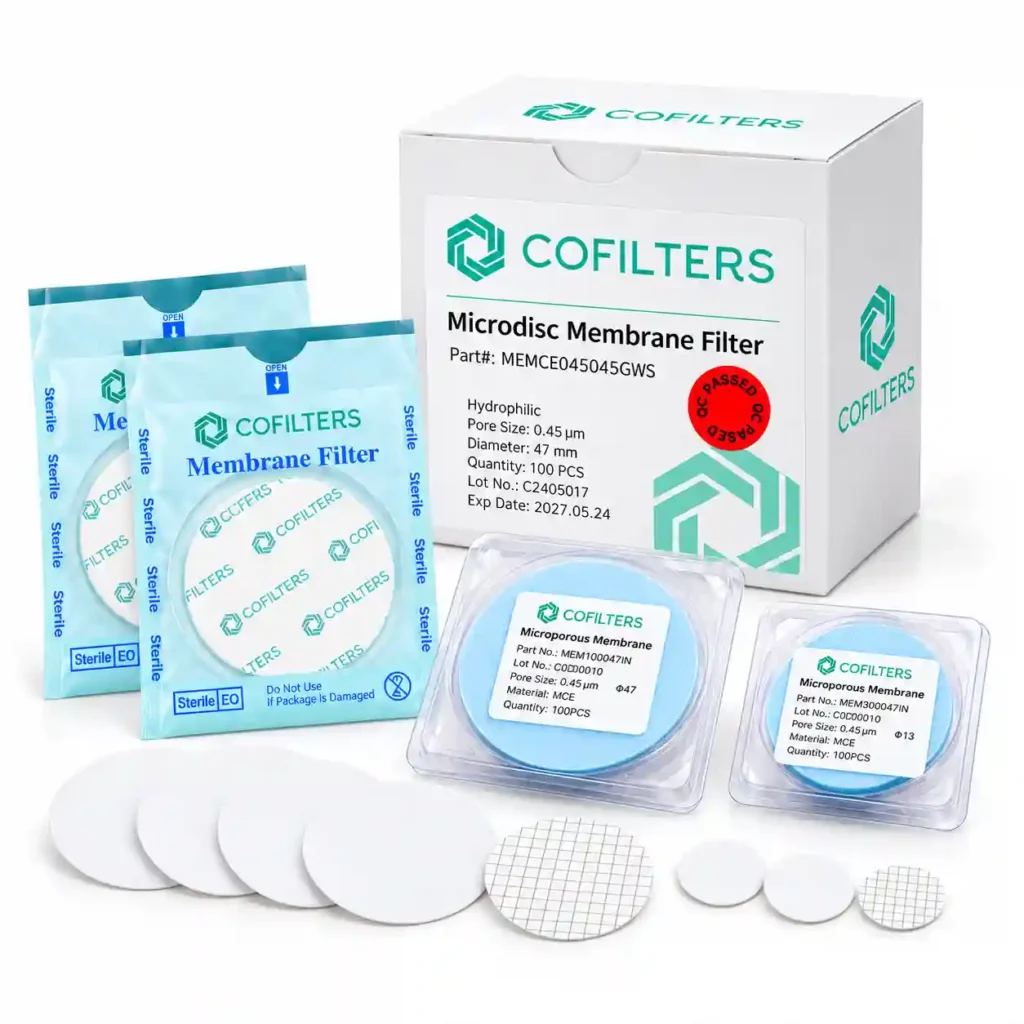
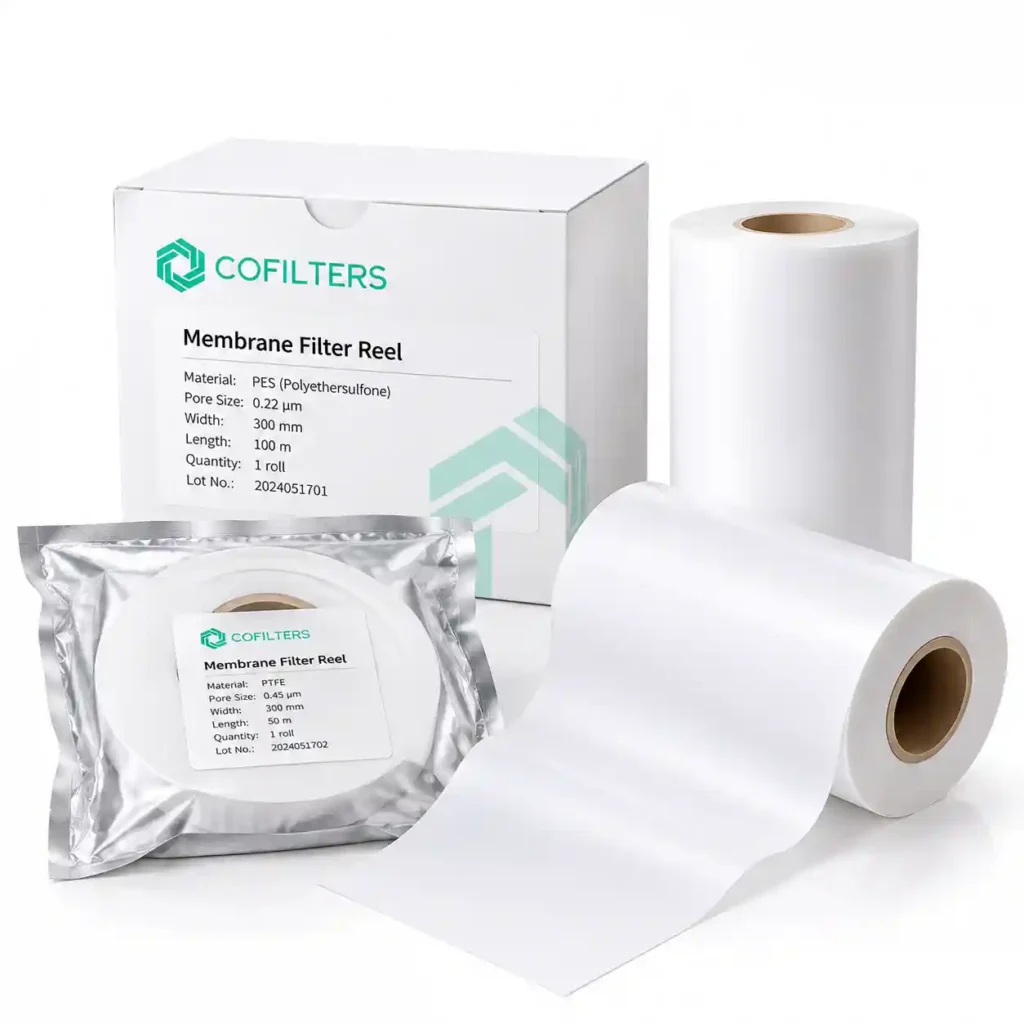
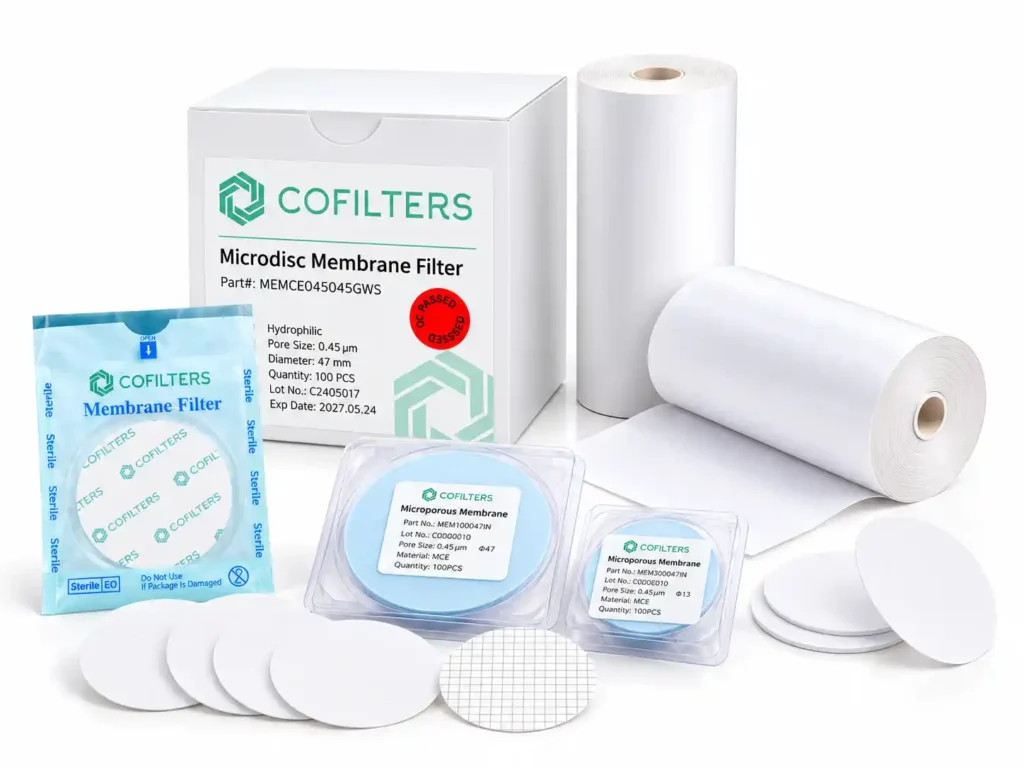
COFILTERS offers 7 membrane materials — Nylon, PES, PTFE, PVDF, MCE, PP and Glass Fiber — with pore sizes from 0.1 to 1.2 μm. Customized surface properties and OEM/ODM capabilities deliver tailored filtration solutions for diverse industrial and laboratory applications.
Safe, Precision Filtration
Precise and reliable separation through controlled pore size and uniformity, balancing filtration accuracy, porosity, flow rate, and particle retention.
COFILTERS helps customers find the right filtration solution for their specific needs. Our OEM/ODM customization and quality testing help optimize compatibility, improve process consistency, reduce material selection risks and simplify sourcing.
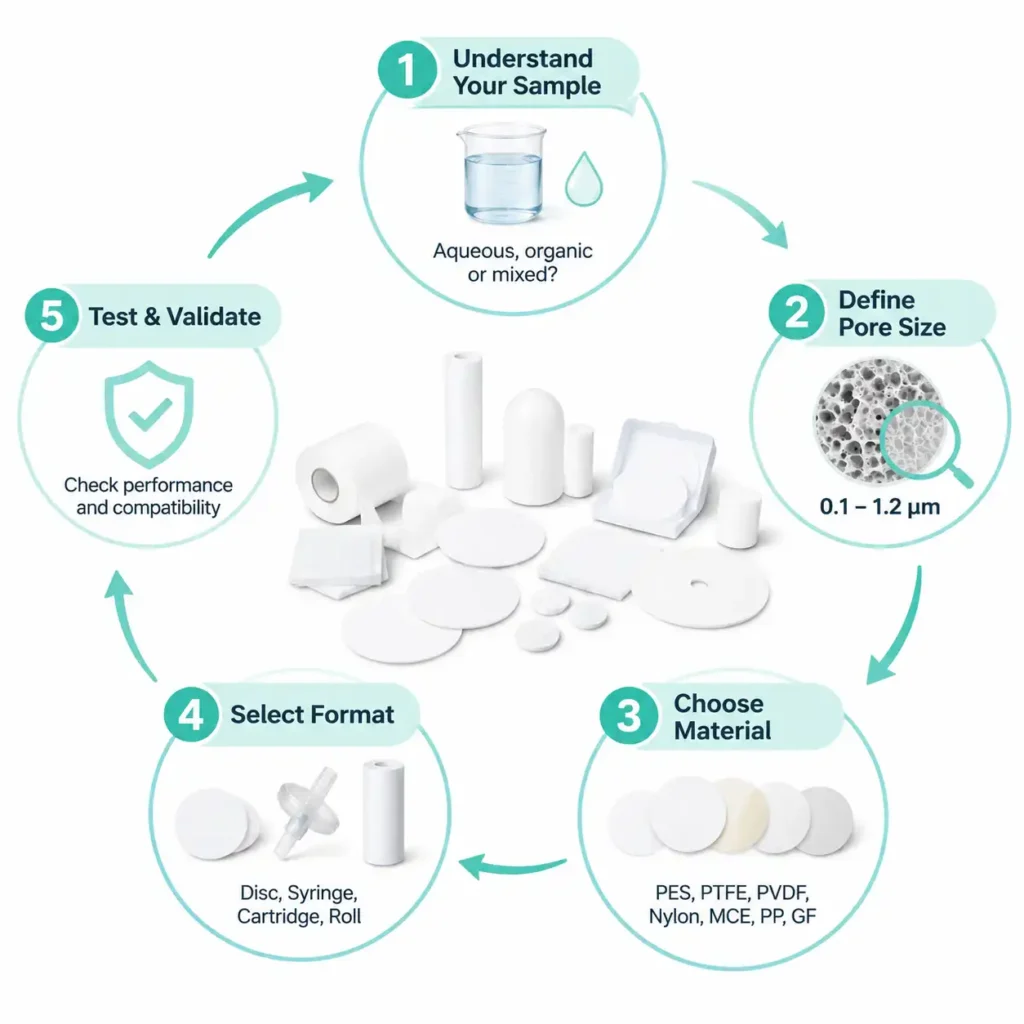
How to Select the Right Membrane Filter
By 5 Steps:
Identify whether your sample is aqueous, organic, or mixed. Consider viscosity, particulate load, and chemical composition to determine the required filtration properties.
Select pore sizes according to target particle retention. Common options include 0.1, 0.22, 0.45 and 0.8–1.2 μm, depending on filtration precision and application.
Match membrane materials to chemical compatibility and sample properties. PES, PTFE, PVDF, Nylon, MCE and Glass Fiber offer different flow rates, binding characteristics and resistance.
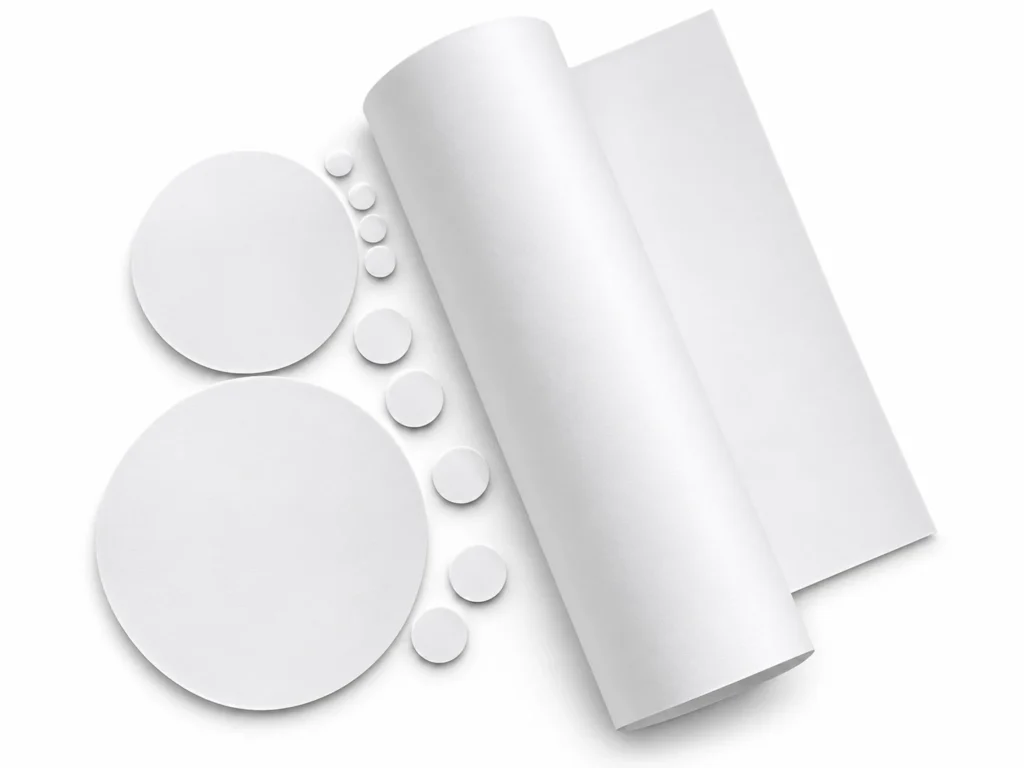
Choose the right format and size based on sample volume and equipment. Options include syringe filters, membrane discs, sheets and rolls for different filtration systems.
Evaluate flow rate, filtration efficiency, particle retention and sample recovery. Conduct compatibility and performance tests to ensure consistent results and reliable filtration.
Have a Part Number?
But How we guaratnee Filter quality?
COFILTERS ensures membrane filter quality through strict quality control, covering pore sizes from 0.1–10 μm, membrane integrity testing (Bubble Point / Diffusion), flow rate and pressure performance, thickness and dimensional accuracy, supported by an ISO 9001 quality management system.
- Material purity
- Controlled Manufacturing
- Membrane Integrity Testing
- Inspection & Verification
Verify membrane materials, specifications and supplier consistency to ensure reliable raw material quality before production.
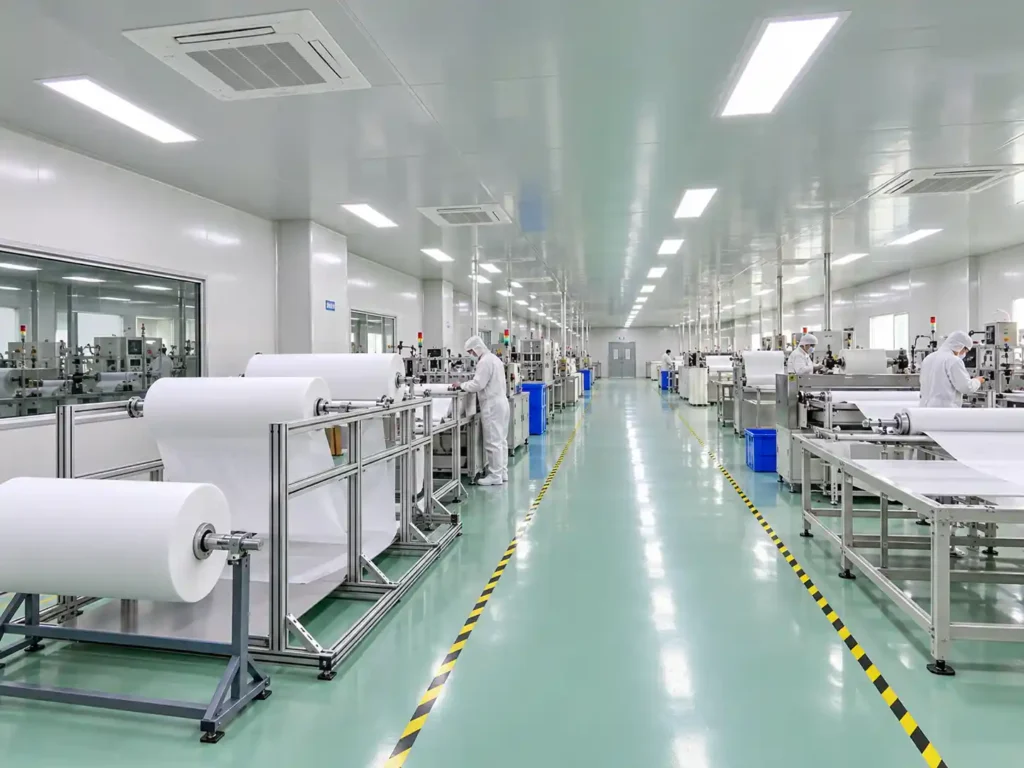
Maintain controlled production conditions, cleanroom environments and standardized operating procedures to minimize contamination and production variations.
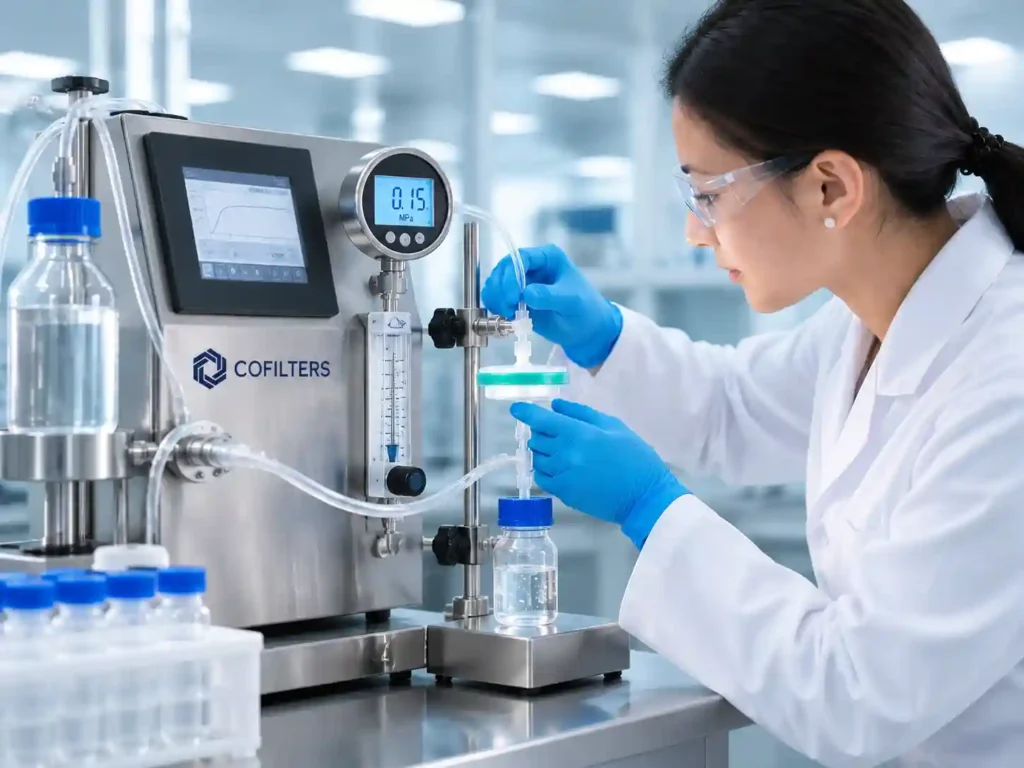
Conduct Bubble Point, Diffusion and Pressure Hold tests to evaluate membrane integrity and detect potential defects.
Inspect finished products, verify performance specifications and maintain batch records to support product traceability and consistent quality.
Identification & Packaging
Lot Coded
- Laser etched lot code on membrane & Cryto cartridges
- Traceable back to raw materials
QR Code / Barcode
- Product traceability
- Links directly to further information for each product
Stock management integration
Four Protective Layers
- Vacuum sealed inner packaging
- Tough outer polybag layer provides additional protection
- Individual product boxes
- Heavy duty outer carton
Frequently Asked Questions
What Does a Membrane Filter Do?
A membrane filter separates particles, microorganisms, and contaminants from liquids or gases through precisely controlled pores. It allows the desired fluid to pass while retaining unwanted substances, making it widely used in pharmaceutical, laboratory, food and beverage, and industrial filtration applications.
How Often Should I Change My Membrane Filter?
Membrane filters should be replaced when flow rates decrease, differential pressure increases, or filtration performance no longer meets requirements. Replacement frequency depends on sample contamination, filtration volume, operating pressure, and membrane material. Always follow application-specific guidelines and manufacturer recommendations.
How Much Does a Membrane Filter Cost?
Membrane filter prices vary depending on material, pore size, diameter, format, quantity, and sterilization requirements. Standard membrane discs generally cost less than customized or specialized products. For accurate pricing, provide your specifications, order quantity, and packaging requirements to the manufacturer.
What Are the Four Main Types of Membrane Filtration?
The four main types of membrane filtration are microfiltration (MF), ultrafiltration (UF), nanofiltration (NF), and reverse osmosis (RO). They differ in pore size, separation mechanisms, and operating pressure, serving applications ranging from particle removal and bacterial retention to molecular separation and water purification.
What Information Should I Provide When Requesting a Membrane Filter Quote?
To receive an accurate quotation, provide the membrane material, pore size, diameter or dimensions, product format, required quantity, and application. Also specify sterilization, packaging, and customization requirements. Complete specifications help manufacturers recommend suitable products and avoid unnecessary sampling or production delays.
How Can I Ensure Membrane Filter Quality When Buying from China?
Evaluate suppliers through material specifications, production capabilities, quality management systems, and inspection records. Request relevant test reports covering pore size, flow rate, and membrane integrity, such as Bubble Point and Diffusion tests. Samples and batch traceability also help verify product consistency before bulk purchasing.
What Documents Should I Request When Importing Membrane Filters from China?
Common documents include a commercial invoice, packing list, certificate of origin when required, product specifications, and relevant quality or test reports. Depending on the application and destination market, you may also need sterilization, compliance, or material safety documentation. Confirm requirements before shipment.
Compliance
- USP Class VI - Plastics
- ISO 9001 & ISO 13485
- Regulation (EC) 1935/2004
- FDA Compliant Materials