Stainless Steel filter housings Supplier
Cofilters supplies stainless steel filter housings for high-pressure, high-temperature, corrosive, and hygiene-sensitive filtration applications. Whether you’re replacing a housing that leaks or corrodes, or specifying one for a new production line, we help you select a housing based on your operating pressure, temperature, flow rate, process fluid, and cleaning requirements.
The right housing can help reduce unplanned downtime, simplify cleaning, and lower replacement costs.
- Your application and fluid/gas type (such as drinking water, brewing, chemicals, or commercial HVAC)
- Target operating pressure, temperature, and flow rate
- Preferred filter style (cartridge, bag, or membrane) and steel grade (304 vs. 316L)
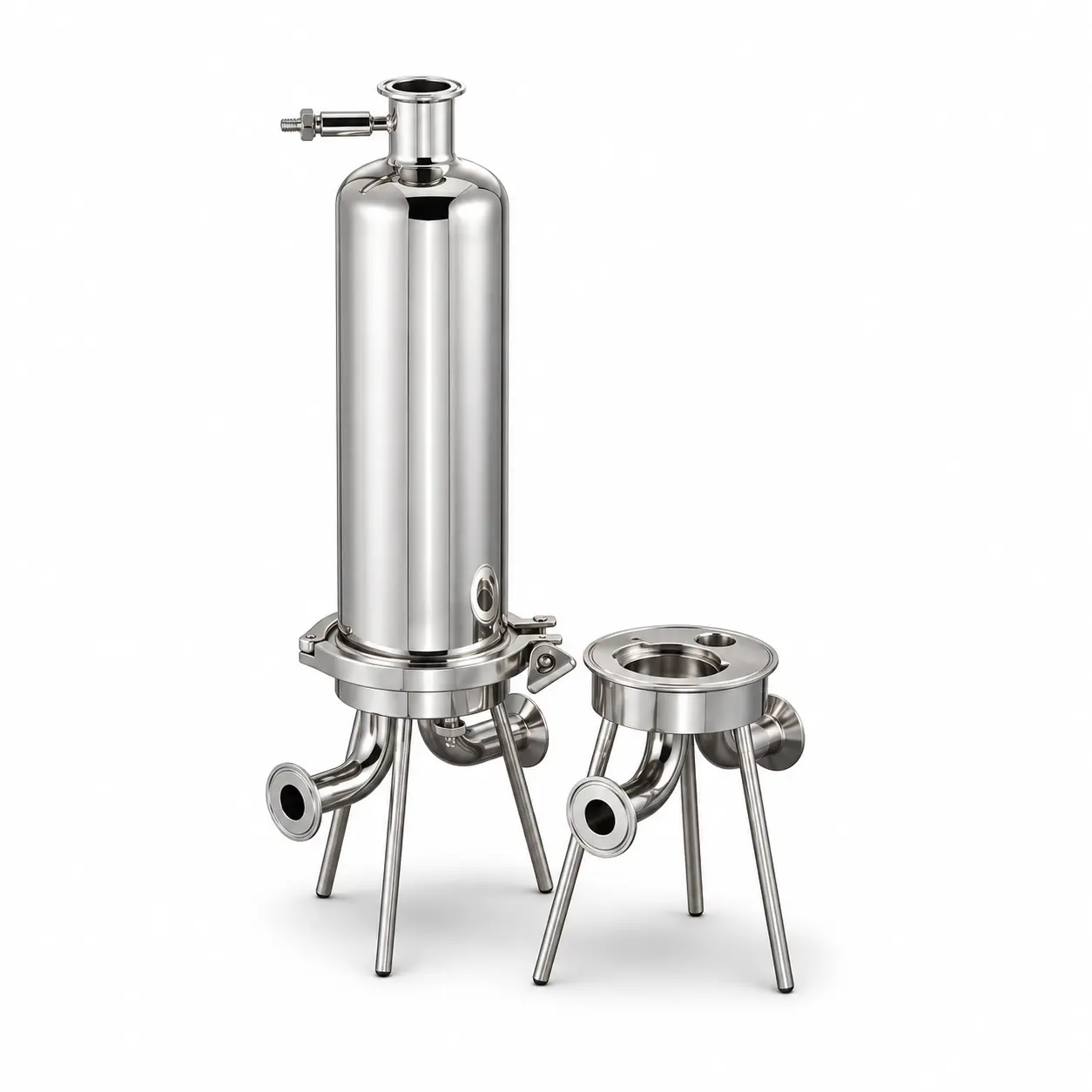
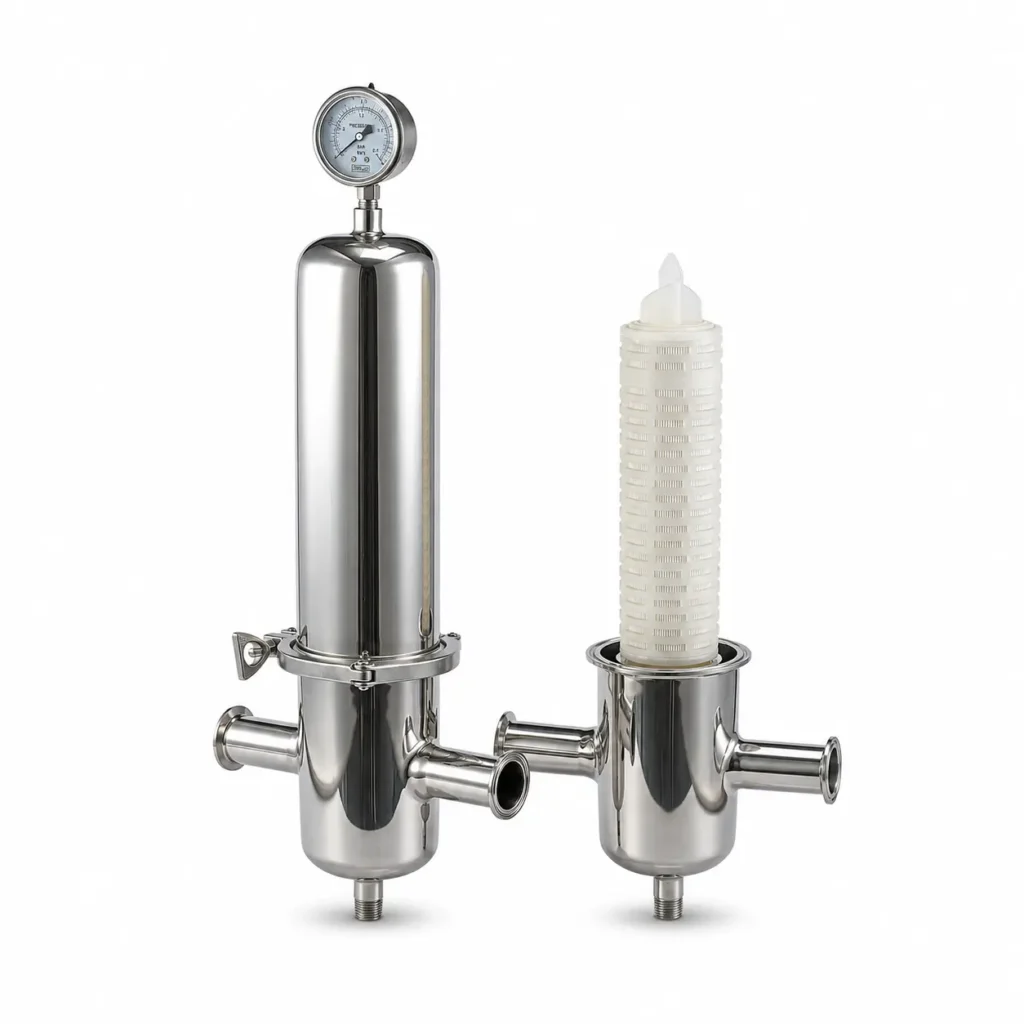
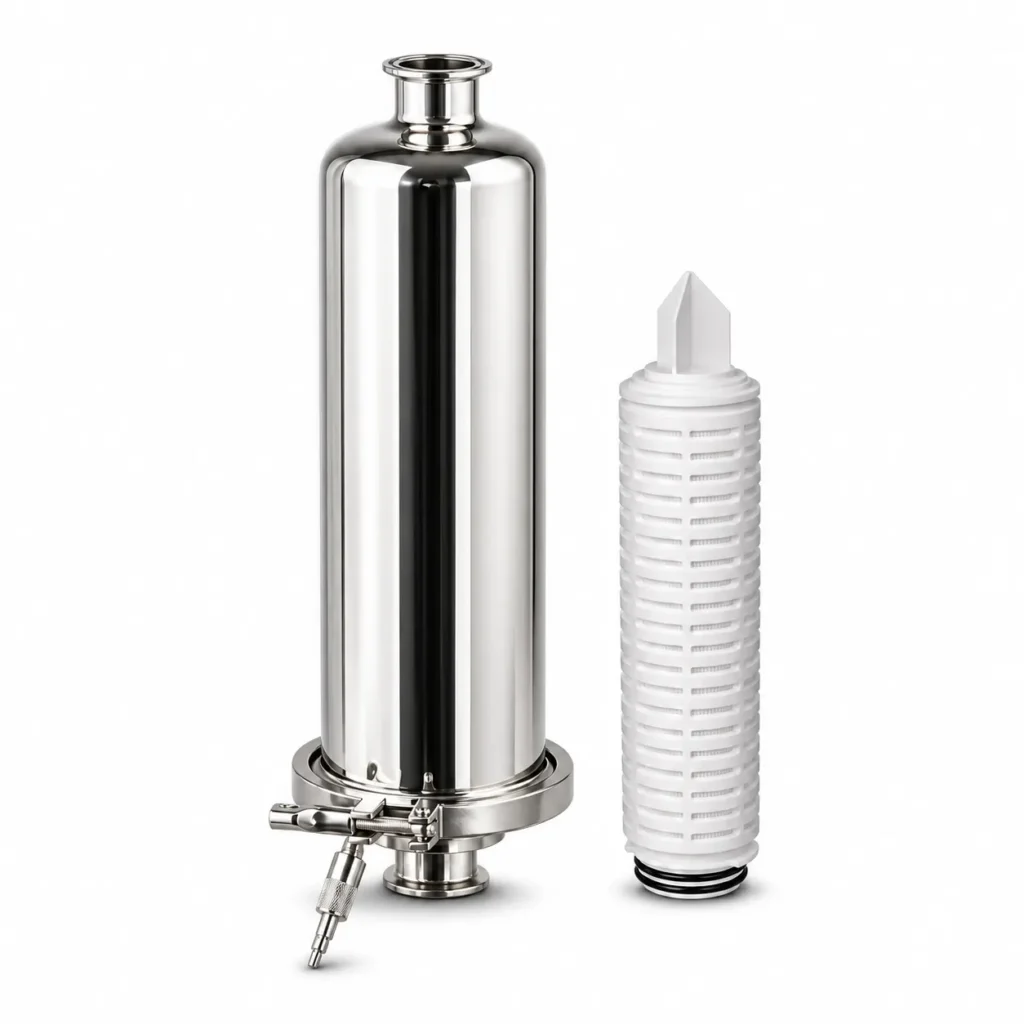
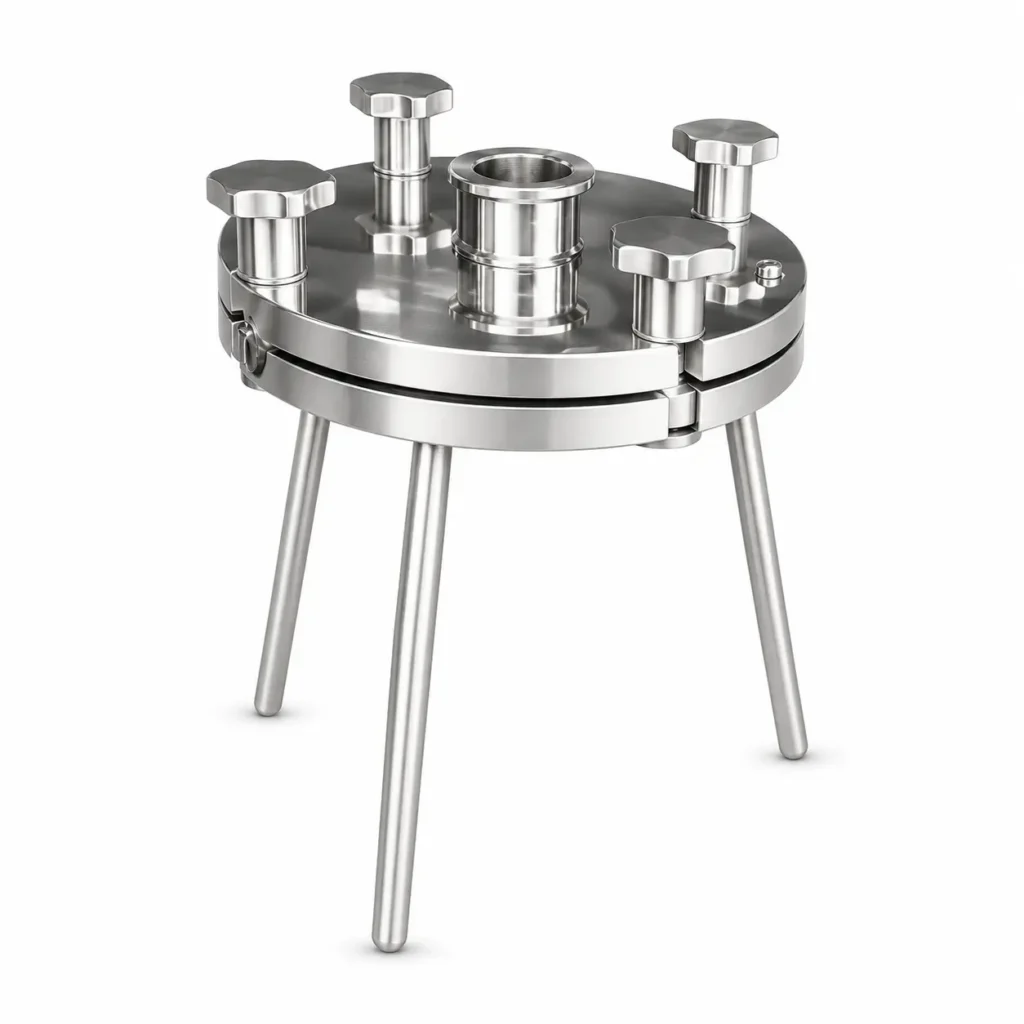
SUS304/316L filter housing Collections
Stainless Steel Liquid Filter Housing
- 5", 10", 20", 30", 40"
- Flange/Tri-Clamp/Thread, Max 8 bar @ 150 ℃
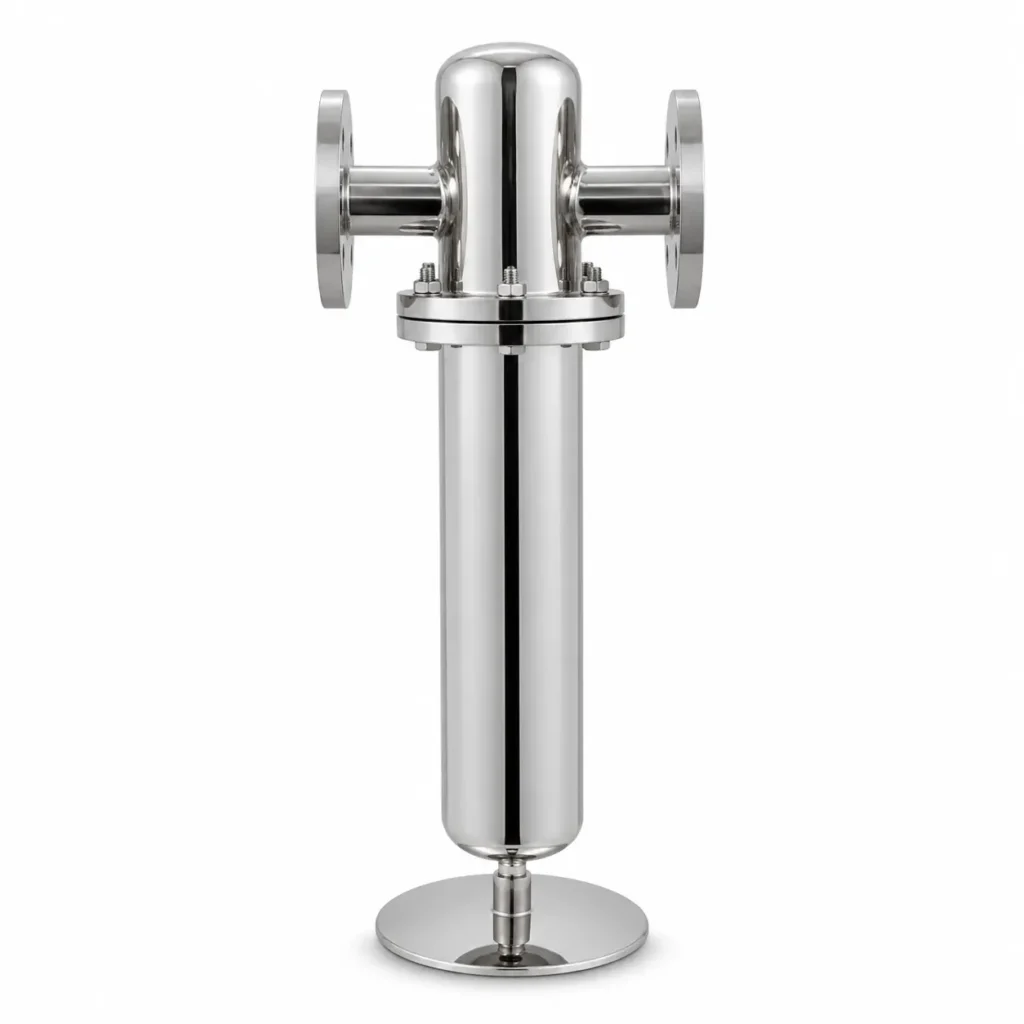
Cross-Type Stainless Steel Gas/Air Filter Housings
- 5", 10", 20", 30"
- Electropolished (EP), mechanically polished (MP)
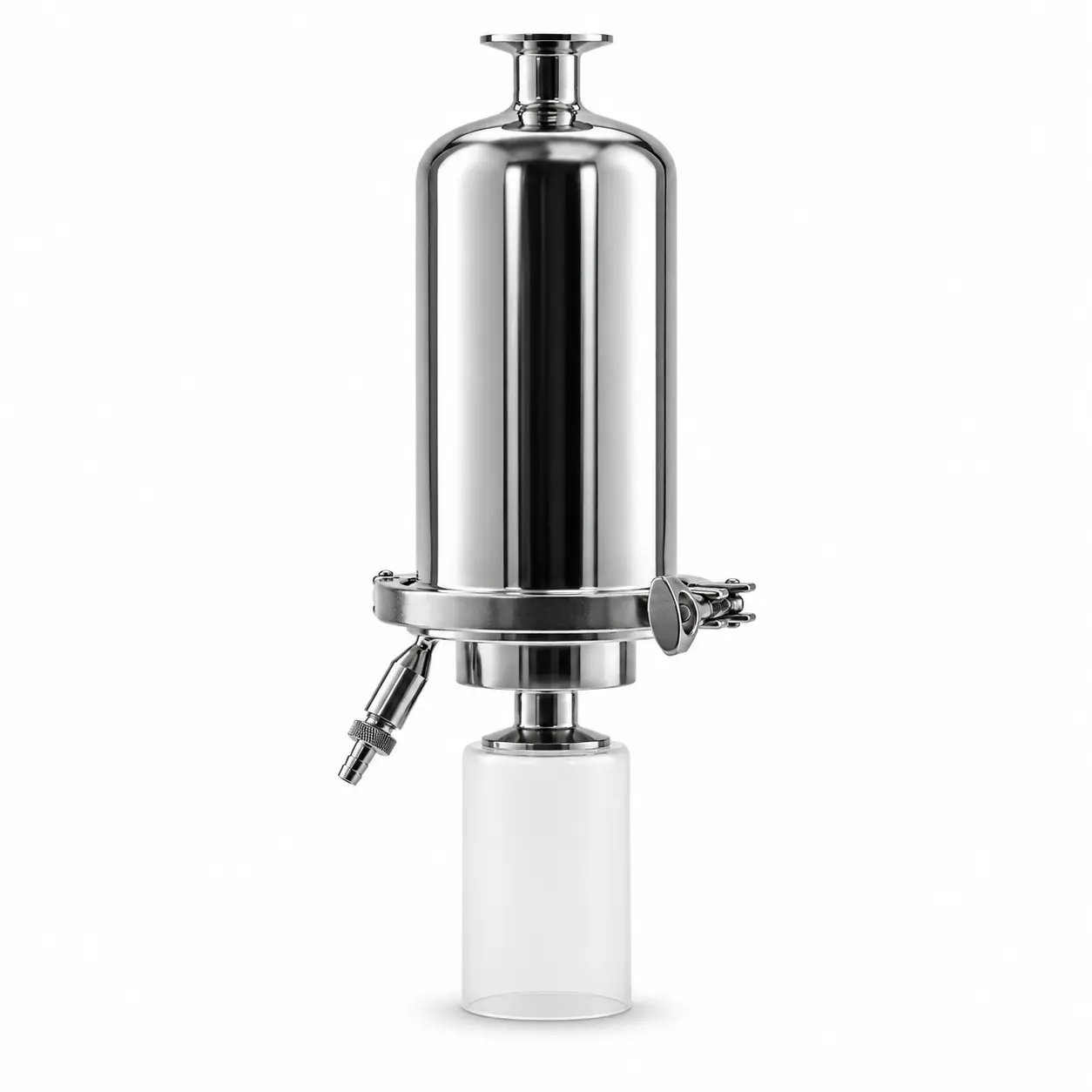
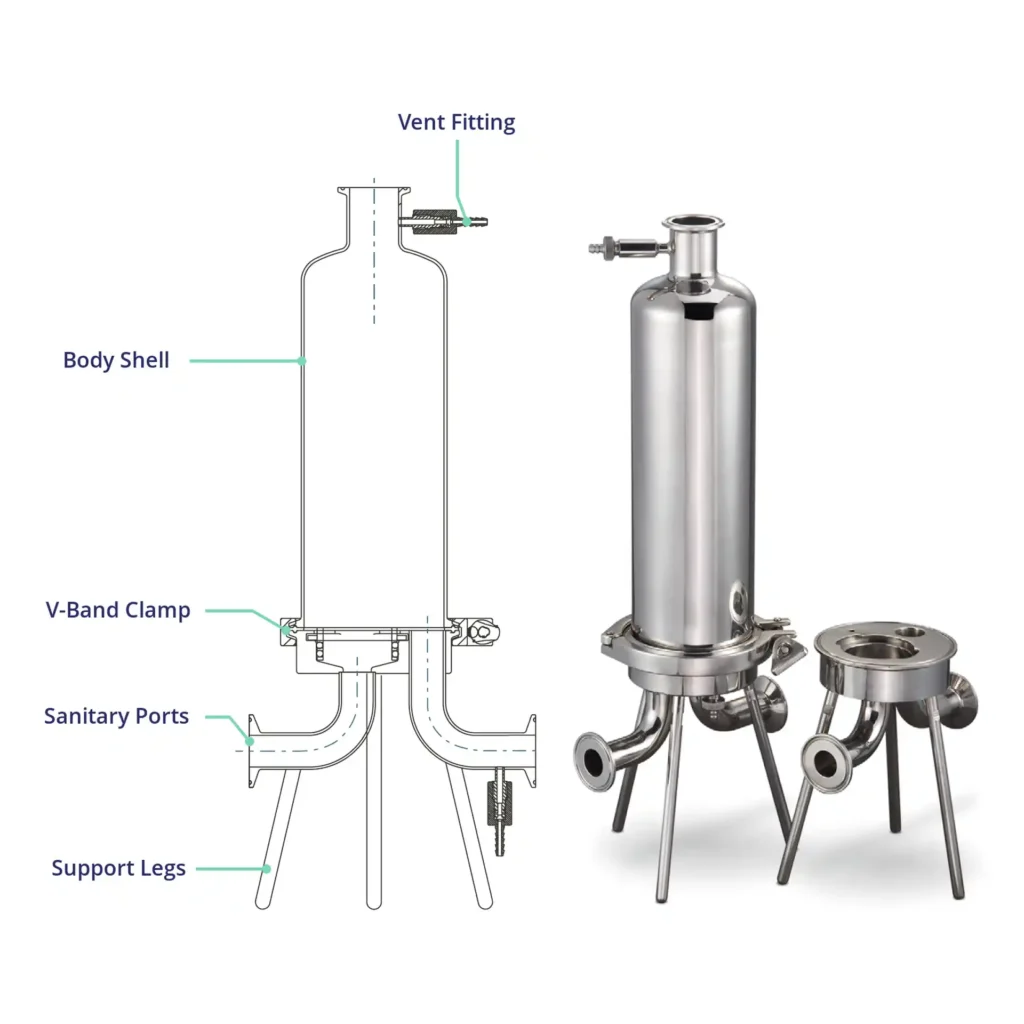
Sanitary Venting Stainless Steel Filter Housing
- 5", 10", 20", 30"
- Sterile air/gas filtration, breath & venting
Stainless Steel Pipeline Filter Housing
- 10", 20", 30", 40“
- GMP Compressed Air Treatment, process water
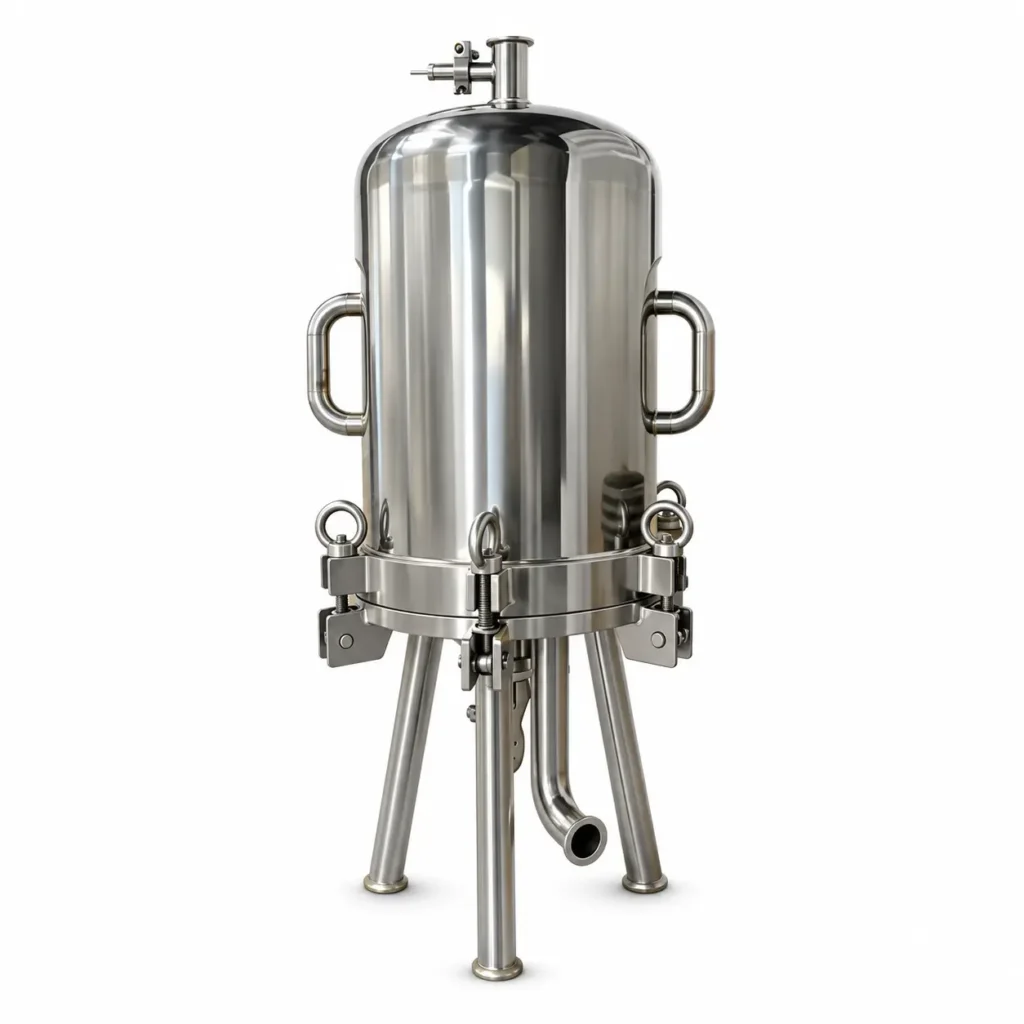
Sanitary stainless steel Lenticular Filter Housings
- 8", 12", 16"
- Available Pall/Cuno/Begerow/Satorious Module
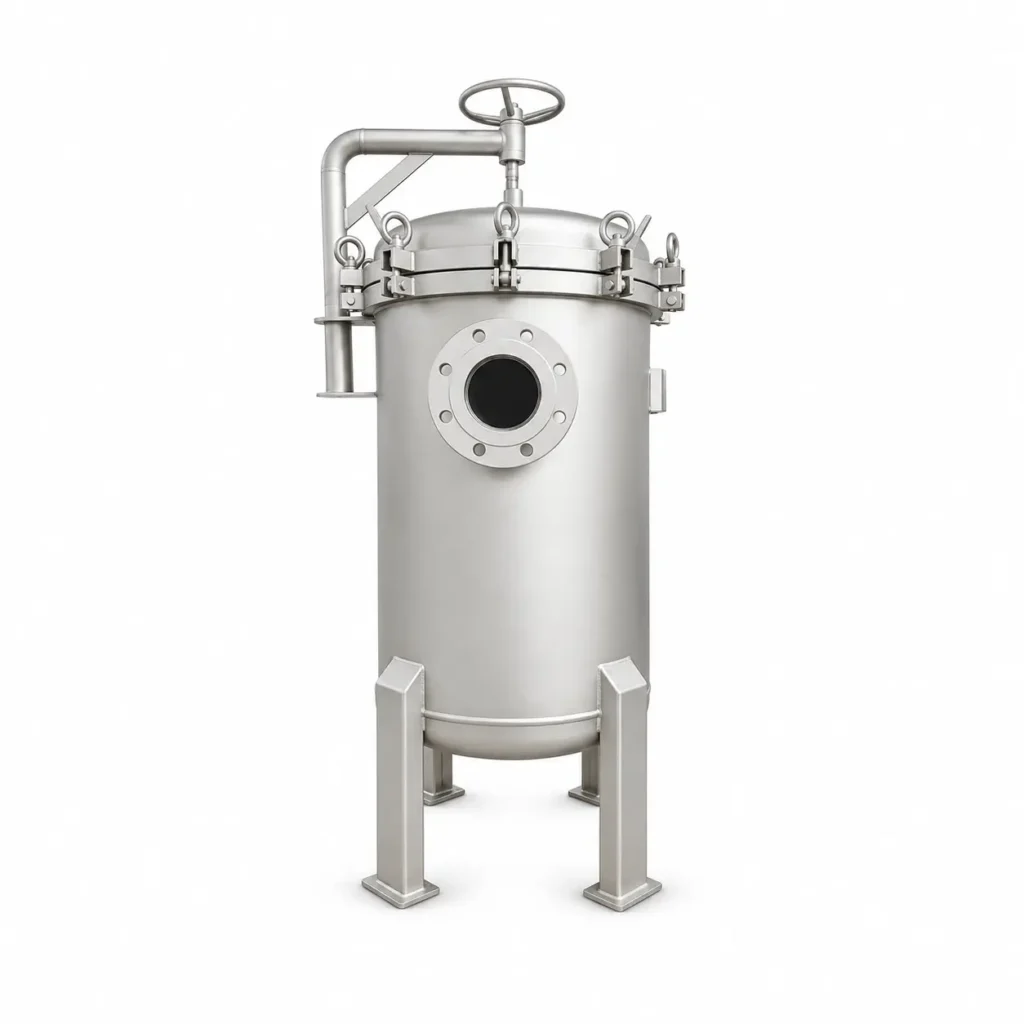
Pre-Filtration High Flow Filter Housing
- 10", 20", 30", 40“
- Pre-filter, protect RO&UF membrane systems.
How Does stainless steel filter housing Work?
Low Adsorption, Easy Clean-Up
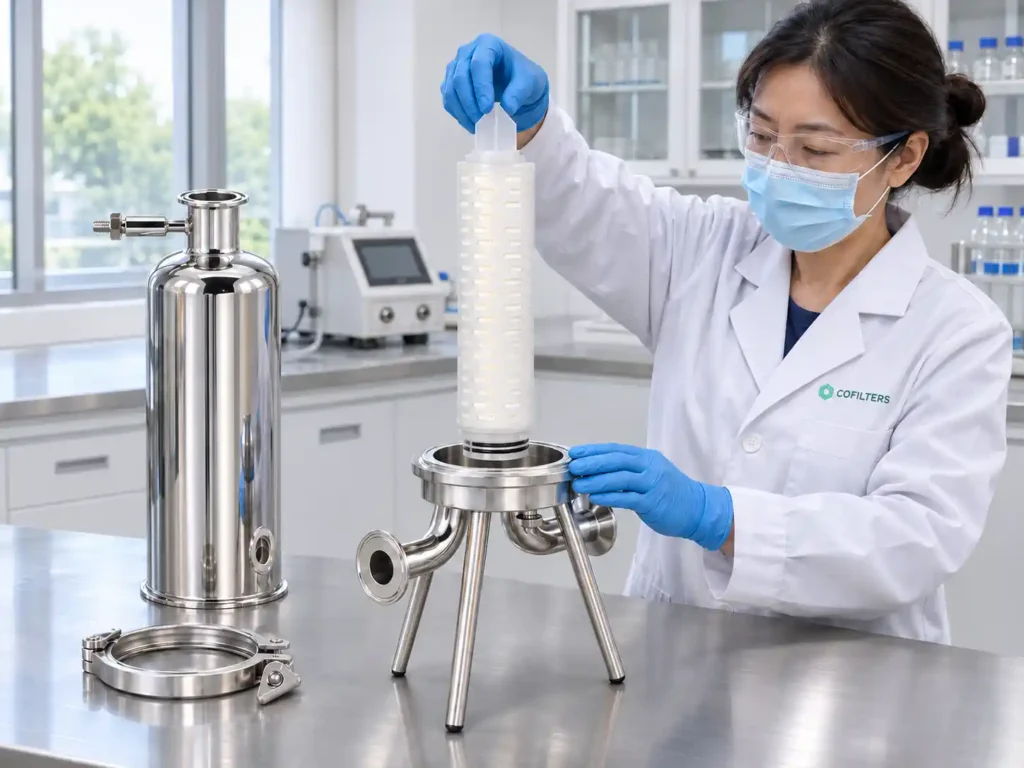
A stainless steel filter housing holds a filter cartridge, bag, or screen inside a sealed vessel. Fluid enters through the inlet, passes through the filter media, and leaves through the outlet. The filter media captures contaminants, while the housing and its seals keep unfiltered fluid from bypassing the element.
Zero leakage
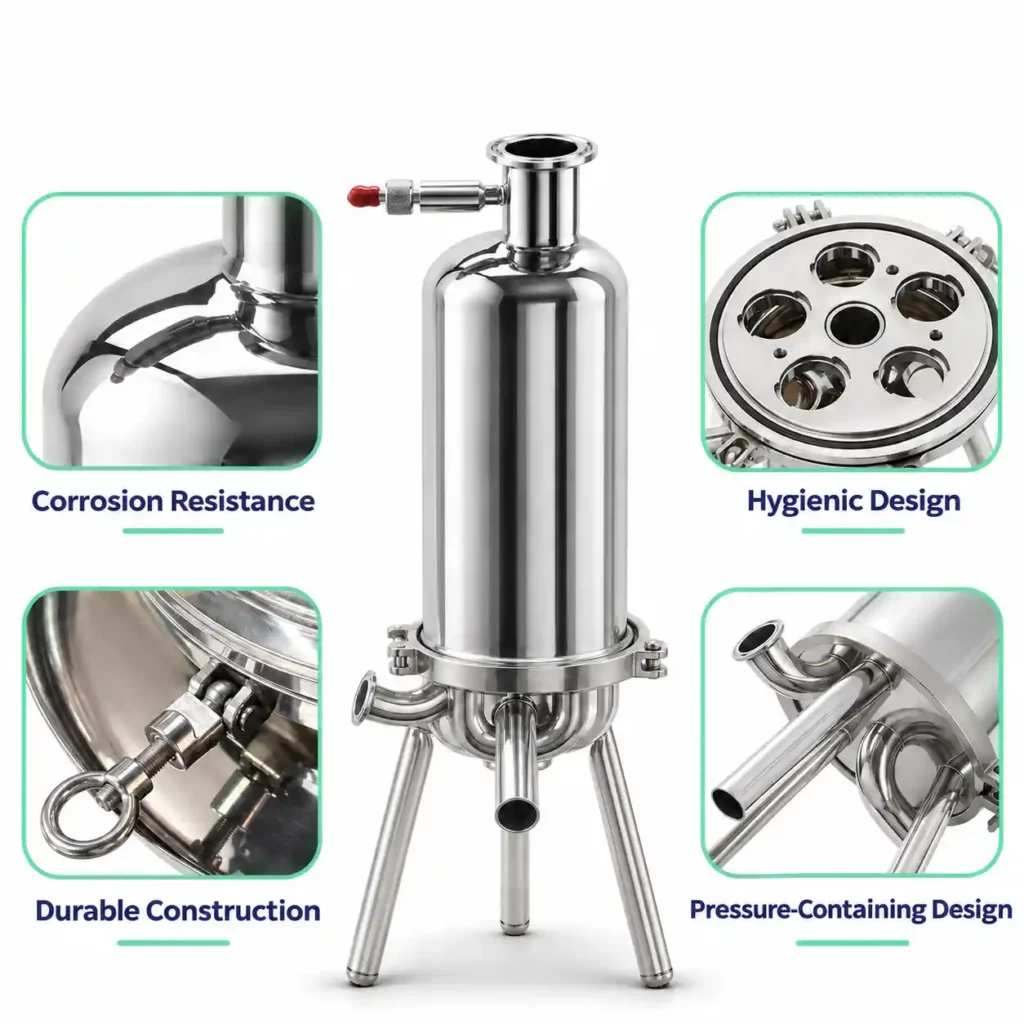
Corrosion, Hygiene, Durability, Pressure
Grades like 304/304L and 316/316L handle high pressures, wide temperatures, and tough industrial environments. Resists many corrosive fluids and offers smooth, cleanable surfaces suited for food, beverage, pharmaceutical, and chemical applications.
How we guaratnee Filter Housing quality
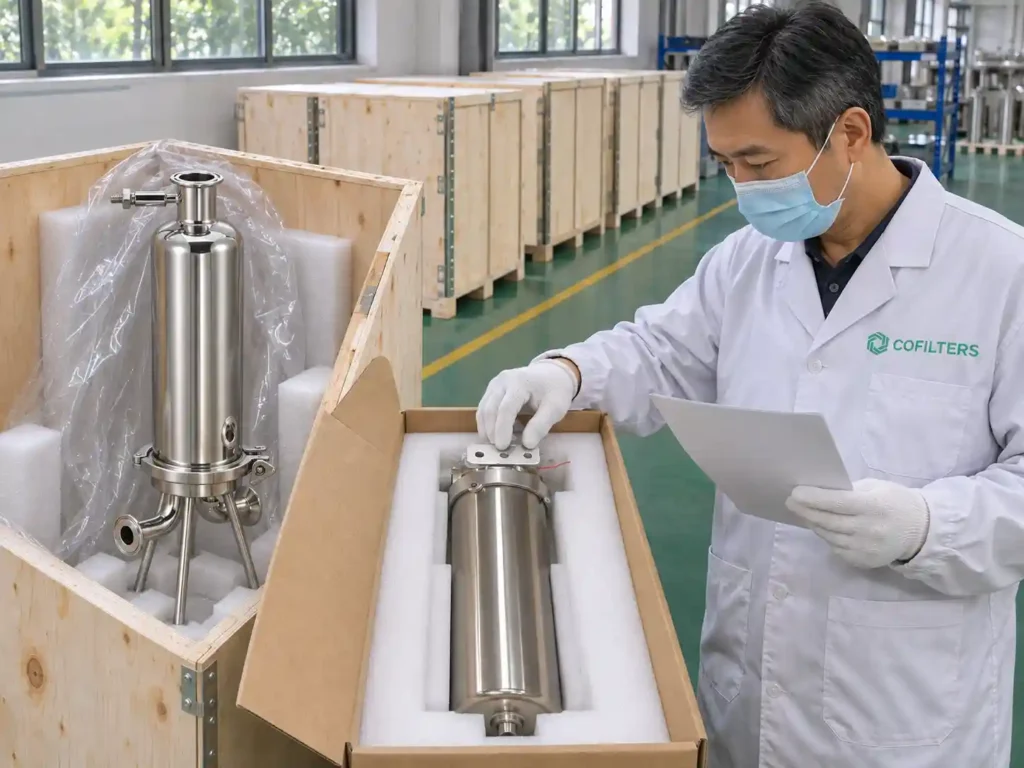
Cofiters verify raw material, inspect welds and surface finish, and review pressure and leak test reports against the specified operating conditions.
- Material Selection
- Assembly and Production
- Performance Testing
- Pre-ship Inspection
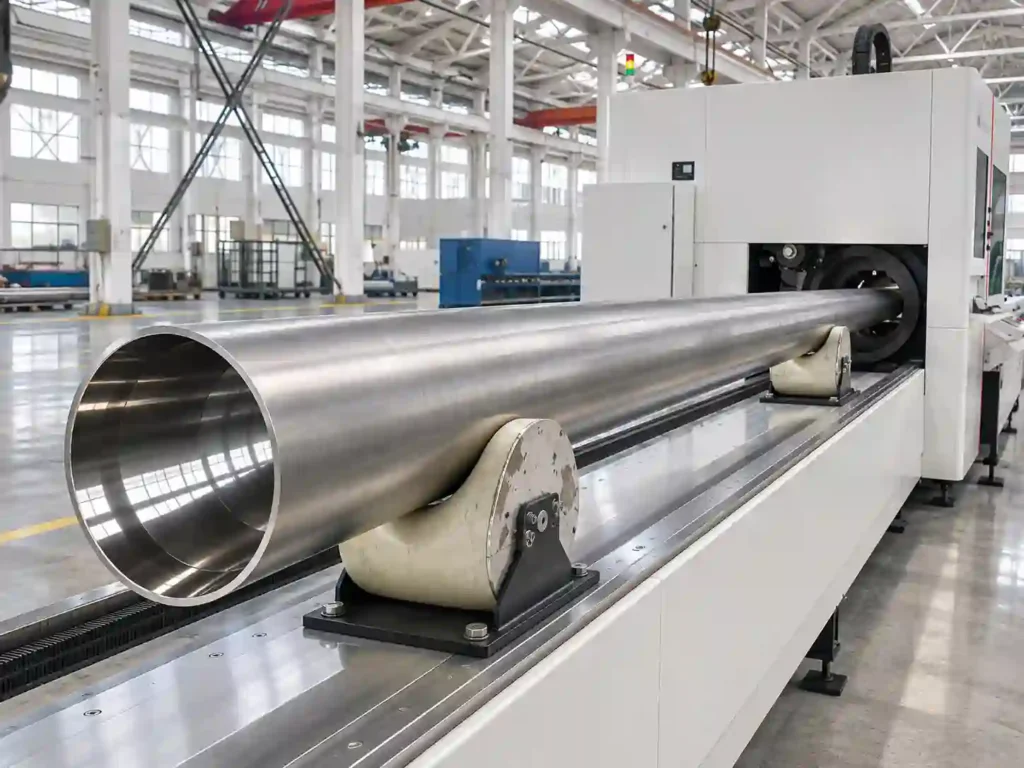
COFILTERS verifies that incoming stainless steel matches the specified grade, 304 or 316, before releasing it for production.
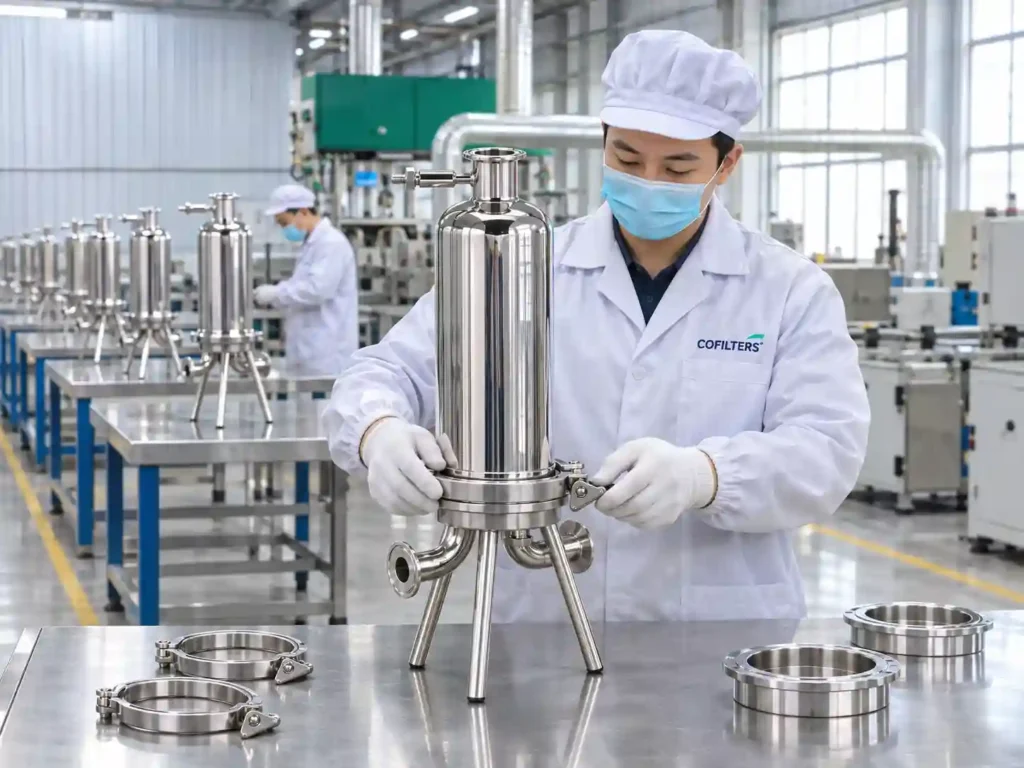
We assemble each housing to the agreed specifications for operating pressure, flow rate, and custom dimensions, based on whether it will filter liquids or gases.
Every housing must pass the required tests before shipment. We document the results in a quality inspection report.
We randomly sample finished housings before dispatch and verify that each shipment lot can be traced back to its production and inspection records.
Frequently Asked Questions
What is an electropolished finish on a filter housing?
An electropolished finish is produced by electrochemically removing a thin layer of stainless steel. The process smooths microscopic surface peaks, improves cleanability, and can enhance corrosion resistance. For hygienic applications, specify which product-contact surfaces need electropolishing and the required surface roughness (Ra).
Are there any painted finishes available for filter housings?
Yes. Some carbon steel filter housings are available with painted or epoxy-coated finishes for corrosion protection. Depending on the model, the coating may cover the exterior only or both the interior and exterior. For coated wetted surfaces, verify compatibility with the process fluid, operating temperature, and cleaning chemicals.
What materials are filter housings typically made of?
Common filter housing materials include 304 or 316-series stainless steel, carbon steel, and plastics such as polypropylene or PVDF. The right material depends on the fluid chemistry, operating pressure and temperature, and cleaning requirements. Check the compatibility of all wetted components, including seals and gaskets.
What Types of Filter Housings Are Available?
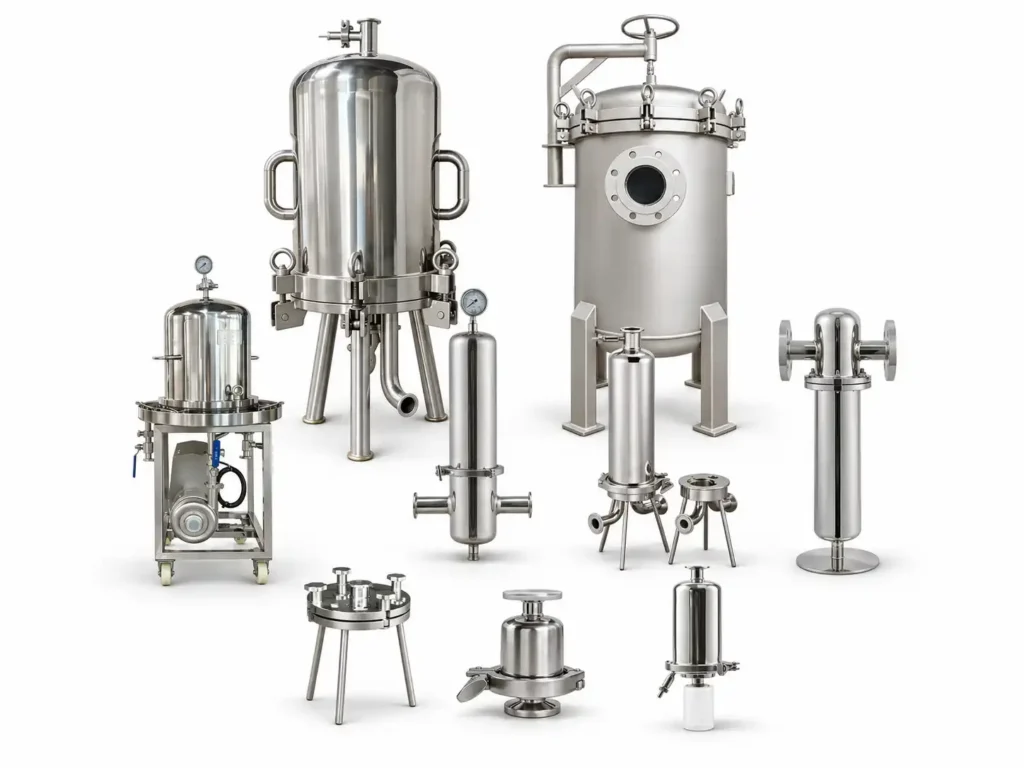
Common types include cartridge housings, bag housings, and housings for basket strainers. Cartridge and bag housings come in single-element and multi-element configurations. Duplex arrangements allow one side to remain in service while the other is maintained. Select a design based on filtration duty, flow rate, and maintenance needs.
What factors determine the size of a filter housing?
Filter housing size depends on peak flow rate, fluid viscosity at operating temperature, allowable pressure drop, and the type and number of filter elements. Contaminant loading affects the filtration area needed between changeouts. Also check port sizes, installation footprint, and clearance for safely removing the elements.
How do you test a filter housing for leaks?
Have qualified personnel follow the housing manufacturer’s approved leak test procedure, including the specified test medium, pressure, and hold time. Check the closure, seals, welds, and connections for leakage using the approved method. Fully depressurize the housing before opening it or adjusting any connections.
What are some applications of filtration systems and filter housings?
Filter housings are used in water treatment, food and beverage production, chemical processing, pharmaceutical manufacturing, and industrial liquid or gas filtration. They hold filter elements that remove particles, clarify liquids, or protect downstream equipment. Housing and element selection depends on the process fluid, cleanliness target, and operating conditions.
Are there specific regulations or standards for filter housings?
Yes. Depending on the installation jurisdiction and vessel classification, filter housings may be subject to the EU Pressure Equipment Directive or requirements based on ASME BPVC Section VIII. Bioprocessing projects may also specify ASME BPE. Confirm the applicable requirements using the design pressure, vessel size, fluid, and intended service.
Can filter housings be used for corrosive or abrasive fluids?
Yes, when the housing, seals, and filter element are selected for the specific fluid and operating conditions. For corrosive service, verify chemical compatibility at operating temperature. For abrasive service, assess particle size, solids loading, and flow velocity, especially where particles can erode inlets, bends, and other wetted surfaces.
How do high-pressure and low-pressure filter housings differ?
High-pressure filter housings have a higher allowable working pressure at a specified temperature. Their shells, closures, seals, and connections must suit the intended pressure duty. Compare each model’s pressure and temperature ratings with your operating conditions, and check the filter element’s differential pressure limit separately.
What types of surface finishes are available for filter housings?
Stainless steel filter housings can have mechanically polished, mirror-polished, bead-blasted, or electropolished surfaces, depending on the model. Internal and external finishes can differ. For sanitary service, specify the required roughness (Ra) on product-contact surfaces and confirm how the manufacturer finishes welds and other areas that are difficult to clean.
Compliance
- USP Class VI - Plastics
- ISO 9001 & ISO 13485
- Regulation (EC) 1935/2004
- FDA Compliant Materials